
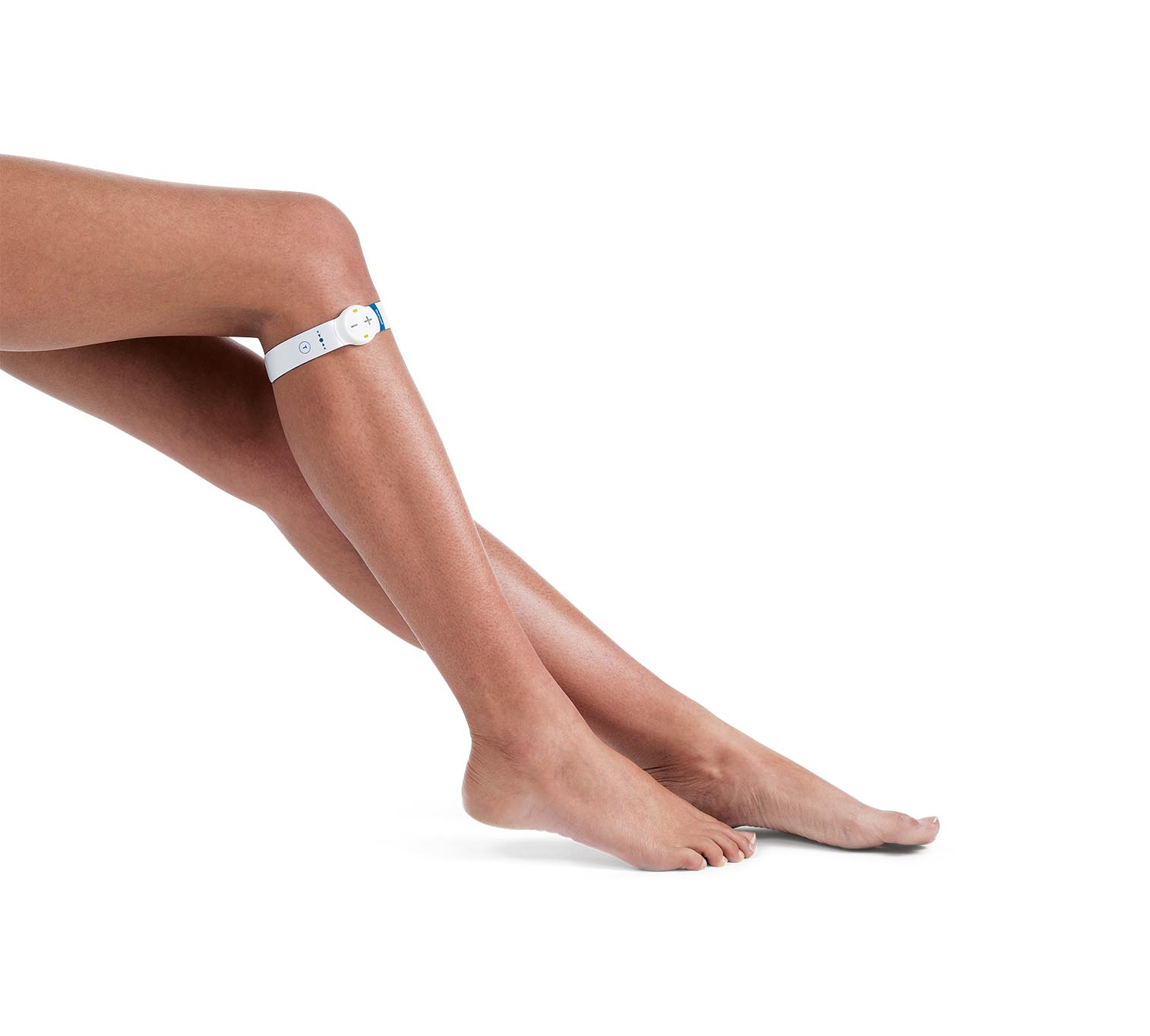

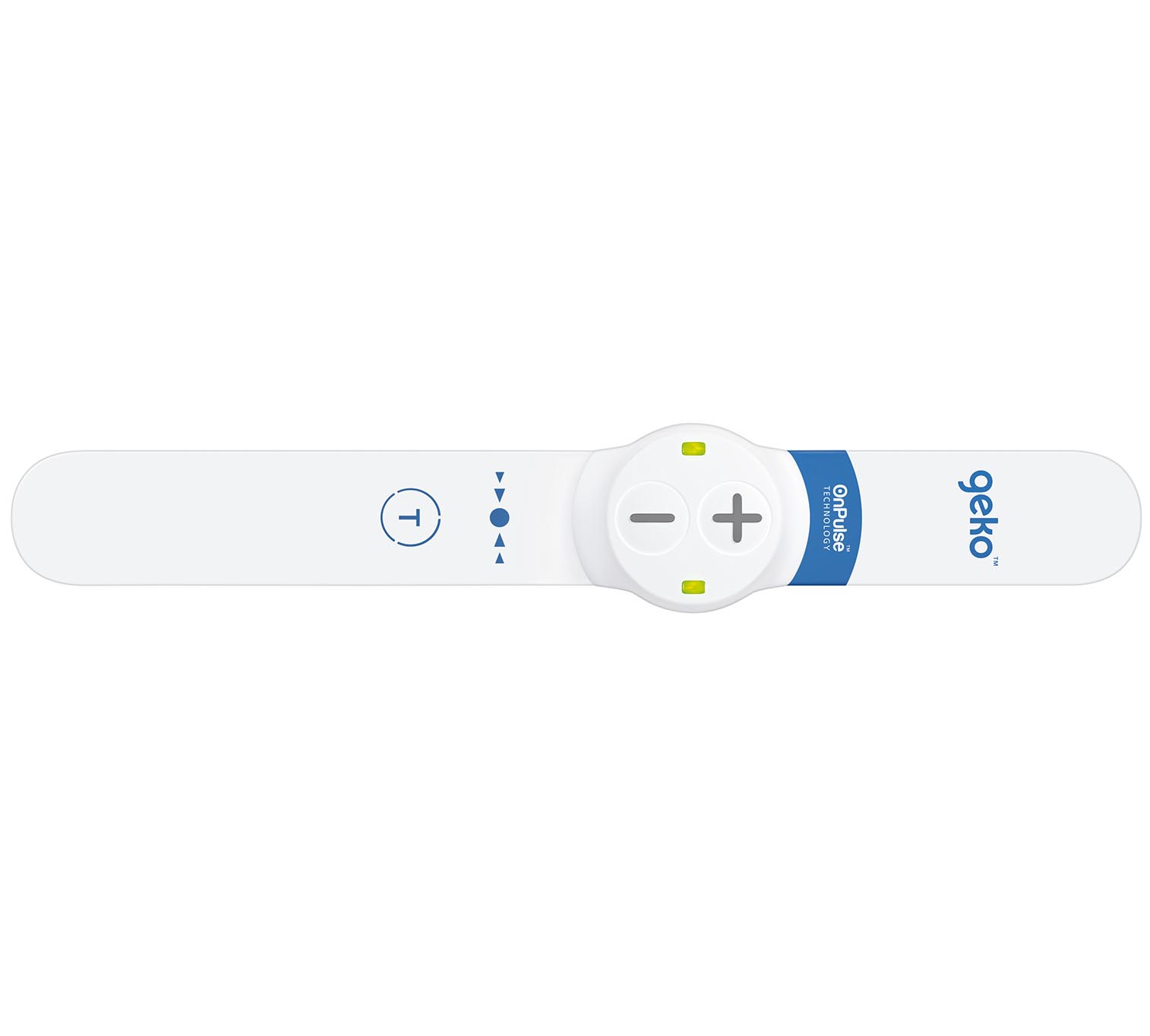
The geko® device, powered by OnPulse™ neuromuscular electrostimulation technology, is clinically proven to increase blood flow to help prevent and treat a range of acute medical conditions. The size of a wristwatch and worn at the knee, the battery-powered, single-use geko® device gently stimulates the common peroneal nerve activating the calf and foot muscle pumps, resulting in increased blood flow in the deep veins of the calf. The geko® device is FDA and TGA approved, UKCA marked, and CE marked (CE1639) as a medical device. Its intended uses include: -increasing blood circulation – prevention of venous thrombosis – prevention and treatment of oedema
Code
Product Description
Dimensions
LMFK-T3RW02-25
Carton of 25 pairs
186mm x 31mm x 9.35mm (Weight = 10g device only)
LMFK-T3RWP2-05
Patient Treatment Pack (5 pairs)
186mm x 31mm x 9.35mm (Weight = 10g device only)
Videos


Factsheets/Resources
Firstkind Ltd geko® Instructions for Use
DownloadFirstkind Ltd geko® Pre-operative oedema reduction brochure
DownloadFirstkind Ltd geko® Post-operative oedema reduction brochure
DownloadFirstkind Ltd geko® VTE Prophylaxis brochure
DownloadFirstkind Ltd geko® Hospital Care Clinical Evidence Summary
DownloadFirstkind Ltd geko® Device Annotated Bibliography
DownloadFrequently Asked Questions
What is the geko® T3 device?
The geko® device, powered by OnPulse™ neuromuscular electro-stimulation technology, is clinically proven to increase blood circulation across a range of in–hospital therapy areas, including the prevention of venous thrombosis (VTE) and the prevention and treatment of oedema.
What does the geko® device do?
The geko® device increases arterial, venous and microcirculatory blood flow. It is FDA marked and CE marked (CE1639) and indicated for the following:
- increased blood circulation
- the prevention of venous thrombosis
- the prevention and treatment of oedema
- promoting the healing of tendon and ligament injuries
How does the geko® device work?
Easy to use, the geko® device is a battery powered, disposable neuromuscular electrostimulation device designed to increase blood flow in the deep veins of the leg.
The geko® device gently stimulates the common peroneal nerve activating the calf and foot muscle pumps, resulting in increased blood flow and the reduction of oedema.
Powered by a wrist-watch size battery with software controlled by plus and minus buttons, the self-adhesive geko®device shapes itself easily and comfortably to the leg.
Green flashing LED lights indicate when the device is switched on and which stimulation level has been set. On the underside of the strap, covered by a water-based conductive hydrogel for secure adhesion, negative and positive electrodes deliver painless neuromuscular electro-stimulation to the common peroneal nerve.
Which locations on the body can I wear the geko® device?
The geko®device is only to be used on the lower limbs. Secure the device to the leg so that the location marker (the line of arrows) is positioned directly over the centre of the fibula head. Correctly fitted, the longer tail should wrap around to the rear of the leg, below and parallel to the crease of the knee. This will place the negative electrode over the common peroneal nerve and will position the ‘plus’ button at the front of the leg and the ‘minus’ button to the rear. The device can also be placed in two alternative fitting locations, just above and just below the crease of the knee aligned to the lateral outer tendon.
How long do I have to wear the geko®device for?
The healthcare professional prescribing the device will advise on the protocol for wear depending on your condition.
Why does the geko® T device have a limited run-time?
The lifetime of the geko® device is controlled by a clock that runs in the software of the device. We know through extensive testing that at the end of the expiry date the battery has sufficient capacity to operate reliably for 30 hours at the maximum setting. As the battery loses capacity its voltage falls and below a certain threshold the device may not function reliably. To maintain VTE prophylaxis the device needs to be able to operate reliably. A 30 hour life allows for 24 hours continuous operation, with a reserve to give time in which busy staff can change the device and maintain 24 hour VTE prophylaxis.
What is considered the correct level of stimulation?
When activated look for a discernible movement of the muscles in the lower leg and visible outwards and upwards movement of the foot. It is not sufficient to see only a slight movement in the muscles of the lower leg alone. The movement in both the lower leg and foot should be discernible.
A visible dorsiflexion is required for the full therapeutic effect and the setting required may change when the leg is bent or extended. Adjust the setting up or down as required with any change of position.
Is the geko® device painful to use?
No, there is no sensation of pain. There is the feeling of the muscles in the lower leg contracting every second which can take a few moments to adjust to. Thereafter it is common to forget you are wearing the device.
How does the geko® device increase peripheral arterial blood flow?
The geko® device increases venous return in the lower limbs. This reduction in venous pressure reduces peripheral capillary resistance, which enhances arterial blood flow – illustrated by direct measurement of arterial system, increased cardiac ejection and a reduction/abolition of the diastolic flow reversal, the consequences of which allow delivery of more oxygenated blood and nutrients to flow to the entire lower limb.
- Increases lower limb and foot skin tissue oxygen
- Also assists in the removal of carbon dioxide and metabolic waste from the lower limb
What is the comparison of blood flow rates between resting, walking using the geko® device?
When we measure the effect of the geko® on increased blood flow, we use the resting blood flow as the comparator. Tucker et al1 compared the increase in volumetric blood flow between resting and with the geko® device activated, and found that the geko® increases the blood flow by 100% in the superficial femoral vein. The superficial femoral vein is the main vein that empties the lower limb and therefore is a good vein in which to measure the overall blood flow in the lower limb.
The measurement of blood flow is made using Doppler ultrasound: this requires the limb being measured to be stationary, therefore it is not possible for a measurement of blood flow during walking to be made.
However, it is known that the effectiveness of the calf muscle pump in pumping blood is approximately proportional to the degree of dorsiflexion. The dorsiflexion given by the geko® device is equal to 60% to that achieved by walking1. (Tucker et al J Angio Vol 19 No 1 Spring 2010)
Is the geko® safe to use with implanted electronic medical devices (e.g. pacemakers)?
Historically there have been reports of electrical stimulators (such as direct muscle stimulators and TENS machines) interfering with implanted electronic devices. We have had no reports of unsafe interactions between the geko® and implanted electronic medical devices, such as pacemakers.
The geko® device complies with stringent international standards relating to interference with other medical devices. However we cannot, at this time, be 100% sure that there will not be any interaction as there are so many possible variables to consider, including the type and location of the device, modes of operation, etc. and so we advise caution when using the geko® on patients with implanted electronic medical devices.
Is the geko® device waterproof?
The geko® device must be kept clean & dry. Do not bathe or shower whilst wearing the device. Prolonged exposure to water will soften the hydrogel and adhesion may be lost. Immersion may also affect the electronics and prevent proper operation. In the event that the device becomes wet, either by water or bodily fluid, there is no danger to the patient. The adhesive gel is water based and therefore slight dampening of the gel will remove the device from the leg once treatment is complete.
How many times can I use a single geko® device?
The geko® is a single-use medical device. This means that it is intended to be used on a single patient as part of a single course of treatment.
What type of electrical stimulation pulse is used by the geko® device?
The geko® device has a constant current, square wave, asymmetrical, charge balanced pulse. The constant current refers to the output of the geko® device which is constant during the duration of the pulse. The voltage of the device will vary according to the patient’s electrical resistance in order to achieve the current output. The stimulation pulse is defined as a square wave. This means that the stimulation current rises rapidly to the required value, which is maintained for the duration of the pulse, followed by a rapid fall to zero. This creates a rectangular or square shape when measured on an oscilloscope.
Can the geko® device be used in close proximity to open radar transmitters or other sources of short wave radiation?
Do not use in proximity (i.e. within 1 metre) of short wave / microwave equipment as this may affect the device. We are required by international standards to provide this warning, but practically this will not affect hospital patients. This warning does not apply to microwave ovens, which are shielded against transmitting microwave radiation.
Can the geko® device be used near mobile communications equipment (e.g. cell phones, CB radio)?
Some medical electrical equipment can be affected by mobile communications equipment and other radio sources and we are required by international standards to warn users that medical electrical equipment can be affected by portable and mobile RF communications equipment. The geko® devices however, have been extensively tested and have been shown not to interfere with, or to be interfered by, radio sources such as cell phones and CB radios.
Are there any contraindications for using the geko® device?
There are no contraindications, though there are warnings and precautions. Please refer to the Instructions for Use leaflet inside your geko® foil pouch or available to download from our IFUs.
How long does the battery last?
The geko® device is intended for 24 hour use. It has a battery life nominally up to 30 hours. After that the software switches the device off, permanently.
Is there a fire risk from the battery used in the geko® device?
The geko® device uses a small lithium-ion battery. There is no risk of it catching fire because it cannot be recharged and is secured within a protective case preventing any short-circuit which could lead to heating. The battery used in the geko® device is small and carries relatively little energy. Concerns of the fire safety of lithium batteries are principally with larger rechargeable batteries. The batteries used in the geko® device are sourced from trusted suppliers and have been subjected to rigorous safety.
What is the shelf life of the geko® device?
The geko® device has a shelf life of two years and the expiration date is printed on each pack.
Are there any precautions or warnings for use of the geko® device near metal implants?
There are no warnings or precautions for using the geko® device in proximity to surgical metal work. The only problem a user might encounter is if the metal work/surgery has damaged the common peroneal nerve and there is peripheral neuropathy. The device stimulates the common peroneal nerve which causes the muscle contraction and increased blood flow so if your nerve is damaged it might not stimulate the muscle. In this event you would suffer no ill effects. However, seek advice from a healthcare professional to check for neuropathy damage.
Does the hydrogel in the geko® device contain gelatin, latex or phthalates?
No. There are no materials of animal origin used in the geko® at all. It is not manufactured using either latex or phthalates
Does the geko® device contain anything that will damage the environment?
No. The geko® device does not contain anything that is known to damage the environment. The geko® complies with current EU environmental legislation.
Do we have any safety evidence for the geko® device?
We have considered the possible risks associated with using the geko® device. To ensure its safety we have designed and manufactured the geko® device in accordance with the International standard for managing the risks of medical devices, ISO 14971. Using this standard as a basis we have designed and manufactured the geko® devices to be intrinsically safe. We have conducted extensive biological safety testing, to the International biocompatibility standard, ISO 10993, and we have data that shows that the hydrogel has tested negative for cytotoxicity, sensitisation and irritation, and can therefore be considered to be hypoallergenic. We have also conducted extensive electrical safety testing. The key International standards are ISO 60601-1, ISO 60601-1-2 and IEC 60601-2-10, the latter being the International standard for electrical safety for powered muscle stimulators. All of the above data has been reviewed by our Notified Body (SGS United Kingdom Ltd) prior to giving us the CE Marking certification. SGS United Kingdom Ltd employs experts in biological and electrical safety testing to scrutinise the data that we have to demonstrate that the geko® devices are intrinsically safe and comply with appropriate International safety standards. We have considered the possible risks associated with using the geko® device. To ensure its safety we have designed and manufactured the geko® device in accordance with the International standard for managing the risks of medical devices, ISO 14971. Using this standard as a basis we have designed and manufactured the geko® devices to be intrinsically safe.
Can the geko® device be used during cardiac arrest?
The geko® device has not specifically been tested when external defibrillators are being used. There is a theoretical risk that the geko® could stop working because of electrical interference, but the device would not incur any damage and there is no additional risk to the patient. The geko® device will continue to work during the use of electro-surgery equipment (diathermy), and so this risk may be small.
Can the geko® device be used for patients who are recovering from cardiac arrest?
The geko® device does not affect the heart rate or blood pressure and therefore the geko® device can be safely used with these patients.
Can the geko® device be used in patients with heart conditions?
We advise that specialist opinion is sought when the patient has a diagnosed heart condition, and provide the following information to guide clinicians in their judgement.
There have been no adverse events reported to Firstkind or in the literature (there are over 70 published papers) concerning heart conditions and geko® devices. We do have unpublished data on file concerning clinical studies that we have run that included patients with a range of cardio-vascular comorbidities (including atrial fibrillation and hypertension) and no adverse events have been reported that were related to these conditions.
The geko® device is not a form of external compression therapy, it works by stimulating the common peroneal nerve activating the calf and foot muscle pumps, resulting in increased venous, arterial and microcirculatory blood flow in the lower limb to which it has been fitted.
The blood flow stimulated by the geko® device equals 60% of that of walking. If a patient has a heart condition but is allowed to walk around then the geko® device is not expected to deleteriously affect the patient’s condition.
Can the geko® be used in an operating theatre?
Yes, the geko® can be used during surgical procedures. However the geko® is not sterile, and should not be within the sterile field.
Can the geko® be used when electro-surgery equipment is being operated?
Yes, the geko® device is safe to use in the presence of operating electro-surgery equipment. Electro-surgery equipment uses electrical currents to cut or cauterize tissues. These currents result in intense magnetic and electrical fields which can interfere with electronic devices, including some neuromuscular stimulators. In the past some neuromuscular stimulators affected by electro-surgery malfunctioned and caused burns to patients, resulting in caution being exercised by the industry and regulators. The geko® device has been designed and manufactured to be immune to the magnetic and electrical effects generated by electro- surgery equipment, making them safe to use in operating theatres where electro-surgery is being used.
Can the geko® be used on patients undergoing anaesthesia?
The geko® will work with a central (spinal or epidural) anaesthesia or a regional block in place, however the geko® device will not work immediately after a muscle relaxant has been given.
Muscle relaxants are used to facilitate intubation, during this period the geko® device will not be able to activate the calf muscle pumps, until the muscle relaxant wears off, which is, in most elective surgery, after about 30 minutes. Most surgery does not need paralysis throughout, and modern ventilators support the patient breathing, so muscle relaxants are not required to suppress breathing. Therefore, the geko® device would be able to be used most of the time during surgery, and particularly in the critical period when a thrombosis is most likely to form.
Can the geko® device be used on a patient following general anaesthetic?
General anaesthesia affects the conduction of nerve impulses and will affect the sensitivity of the peroneal nerve to stimulation by the geko® device. It is very likely that the stimulation level will be affected by anaesthesia, and in some cases may not achieve stimulation. If stimulation is visible in the patient (i.e. by a twitch of the foot) then there is an increase in blood flow.
Can the geko® device overstimulate the nerve or cause long term problems?
There is no long-term effect on the nerve: the geko® device has been used over periods of several weeks to treat chronic conditions and no issues of overstimulation have been reported in subsequent publications. The use of the geko® device has been the subject of numerous studies and there have been no reports of any long-term problems with the stimulation level. The amount of electrical charge required by the geko® device to achieve stimulation of the common peroneal nerve is much less than other electrical stimulators because of the unique way in which the geko® device works. The electrical charge is ‘balanced’, that is - there is zero net charge delivered to the patient, this is achieved by having a series of small pulses following the stimulation pulse of opposite polarity which balances the charge in the stimulation pulse without stimulating the nerve further. This prevents electrochemical changes in the skin occurring.
If ‘over stimulation’ refers to the strength of the contraction, there is a natural limit to the strength of the muscle contraction that the geko® device can achieve. The stimulation level is controlled by the pulse width (that is the length of time that the stimulation pulse lasts for). The maximum 560 micro-second pulse width will only cause a single short contraction of the calf muscles controlled by the common peroneal nerve. Longer contractions require repeated stimulation pulses.
Can the geko® device be used on children?
The safety of the geko® devices has not been tested on children.
Can the geko® device be applied to fragile or compromised skin?
Do not apply stimulation over open wounds or rashes, or over swollen, red, infected, or inflamed areas or skin eruptions. This may include conditions such as phlebitis, thrombophlebitis or varicose veins where the skin is inflamed or compromised.
Can the geko® be safely and reliably used when a patient has an arterial line in their foot?
Arterial line placement is a common procedure in various critical care settings. Intra-arterial blood pressure (BP) measurement is more accurate than measurement of BP by non-invasive means, especially in the critically ill. Intra-arterial BP management permits the rapid recognition of BP changes that is vital for patients on continuous infusions of vasoactive drugs. Arterial cannulation also allows repeated arterial blood gas samples to be drawn without injury to the patient. Overall, arterial line placement is considered a safe procedure, with a rate of major complications that is below 1%. It is not entirely without risks, however, and it requires appropriate knowledge of the anatomy and procedural skills. Arterial lines can be placed in multiple arteries, including the radial, ulnar, brachial, axillary, posterior tibial, femoral, and dorsalis pedis arteries.
Can the geko® device be used to treat patients diagnosed with Compartment Syndrome?
There are two main types of compartment syndrome: Acute and Chronic.
The geko® device should not be used on patients suspected of or have been diagnosed with acute compartment syndrome after a traumatic injury.
Firstkind Ltd does not have data supporting use of geko® device in individuals with exercise induced chronic compartment syndrome.
Are there any safety concerns in using the geko® device on a patient with a glucose monitoring device?
The geko® device has been tested for electromagnetic compatibility (this is the level of electromagnetic emissions produced by the geko® ) and is unlikely to affect other medical devices. The geko® device has also been tested to ensure that sources of electromagnetic interference (e.g. other devices, mobile phones etc.) do not interfere with the operation of the device. We do not anticipate any issues with the geko® device interfering with (or being interfered by) other medical devices, such as glucose monitors.
Find out more

Bridging true innovation and care.
Learn more about partnering with us to improve patient outcomes.